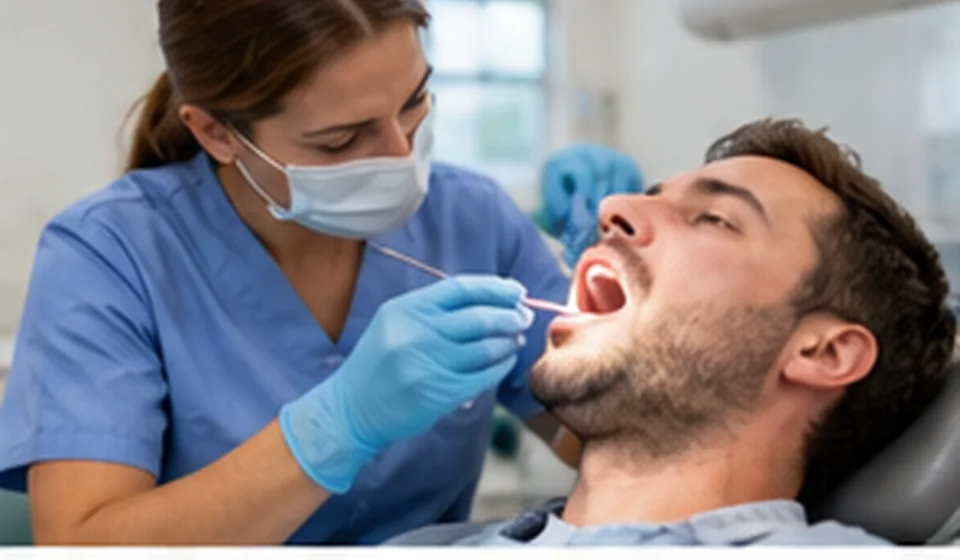
Toothache does not wait for payday. When you are on benefits, a zero-hours contract, a part-time wage or a small pension, the fear of a dental bill can lead to putting treatment off until a small filling becomes an extraction or an infection. Others end up paying privately, or borrowing, simply because they cannot find an NHS dentist taking on patients.
In the UK, many people on low incomes are entitled to free or reduced-cost NHS dental care and do not know it. This page explains who qualifies, how the NHS Low Income Scheme works, what to do in a dental emergency, and how to approach the cost of treatment without falling into expensive debt.
Who gets free NHS dental treatment
In England, you do not pay NHS dental charges if, when your course of treatment starts, you are:
- under 18, or under 19 and in full-time education;
- pregnant, or have had a baby in the previous 12 months, with a valid maternity exemption certificate;
- receiving Income Support, income-based Jobseeker's Allowance, income-related Employment and Support Allowance, or the Guarantee Credit part of Pension Credit;
- receiving Universal Credit and your earnings in the relevant assessment period were below the threshold set for help with health costs;
- named on a valid NHS tax credit exemption certificate or an HC2 certificate.
Wales and Northern Ireland have similar exemptions, with their own charges. In Scotland, NHS dental examinations are free for everyone, and the same kind of low-income exemptions apply to other treatment.
Always tell the practice which exemption you are claiming and have proof ready, such as a benefit award letter. Practices and the NHS check claims after treatment, and a wrong claim, even an honest mistake, can lead to a penalty charge. If you are unsure whether your Universal Credit earnings were low enough, check before signing the form.
The NHS Low Income Scheme: HC2 and HC3
If you do not receive a qualifying benefit but money is tight, you can apply to the NHS Low Income Scheme with form HC1, online or on paper. The assessment looks at your income, savings and housing costs, and it is open to people in work, students, pensioners and people between jobs, as long as savings are under the limit.
- An HC2 certificate gives full help: free NHS dental treatment, as well as free prescriptions, sight tests and help with travel to hospital.
- An HC3 certificate gives partial help: it sets the maximum you are expected to pay towards NHS charges.
Decisions can take several weeks, so apply as soon as you know treatment is likely. If you have to pay before the certificate arrives, ask for a receipt: you may be able to claim a refund within the time allowed. The same certificate can also cut what you pay for other health costs, explained on our pages about help with prescriptions and medicines and help paying for glasses.
Finding an NHS dentist and urgent care
NHS dental places are hard to find in many areas, which is the main reason people on low incomes end up with private bills. Before accepting private treatment, try the following:
- use the NHS service finder for your nation, then phone practices directly, because online availability is not always up to date;
- ask to go on a waiting list at several practices, not just one;
- if you are in pain, have swelling or a broken tooth and cannot get an NHS appointment, call NHS 111 (NHS 24 on 111 in Scotland), which can arrange urgent dental care;
- go to A&E only for serious emergencies, such as swelling affecting your breathing or eye, heavy bleeding that will not stop, or a facial injury;
- contact your local NHS body (the integrated care board in England, or the health board in Wales and Scotland) if you cannot find any NHS dentist, and ask what is available.
Urgent NHS treatment is charged at the urgent band rate, and the same exemptions apply, so free treatment remains free.
Lower-cost routes outside a regular practice
Some options are less well known but can be useful on a tight budget:
- Dental teaching hospitals and schools: some offer treatment carried out by supervised students, often at NHS rates. Waiting lists and eligibility vary.
- Community dental services: NHS services for people who find it hard to use an ordinary practice, for example because of a disability, a serious health condition or anxiety. A GP, health visitor or social worker can refer you.
- Dental charities and outreach clinics: some charities run free clinics for people who are homeless or in crisis. Ask a local advice service what exists near you.
When treatment is private: questions to ask first
Sometimes there is no realistic NHS option, or you need treatment that is only available privately. Before agreeing, ask:
- for a written treatment plan with a full price, including any follow-up visits;
- whether any part of the work could be done on the NHS, and only the remainder privately;
- whether a cheaper alternative is clinically acceptable, for example a filling instead of a crown, or a denture instead of an implant;
- whether the treatment can be done in stages, so the cost is spread without borrowing;
- whether the practice accepts payment by instalments with no interest.
Ask for time to think if you feel rushed. A reputable dentist will explain what is urgent and what can safely wait.
Grants and help from other sources
Dental bills are rarely covered by local crisis schemes, but a few routes are worth asking about:
- charitable grants for people with a particular job history, disability or health condition, found through a free grant search tool or an adviser;
- help from a trade union, a former employer's benevolent fund or a professional body;
- student hardship funds, through your university or college;
- health cash plans through work, if you have one, which may refund part of routine dental costs.
Our page on charitable hardship grants explains how to search and apply. For other health-related bills, see our guide to help with medical costs.
Borrowing for dental treatment: the last resort
Clinics often offer "0% finance" or monthly payment plans. These are credit agreements, usually arranged through a lender, and they need care:
- check whether the 0% rate lasts for the whole term, or only for an introductory period;
- read what happens if you miss a payment, as charges and interest can apply;
- remember that a credit check may be carried out, and a refusal or default affects your credit file;
- compare the APR and the total amount repayable with a credit union loan or an interest-free Budgeting Advance from Universal Credit.
Avoid payday loans, high-cost short-term credit and unregulated lenders for dental work. A loan you cannot repay turns a health problem into a long-term debt problem. Be careful too with "dental tourism" packages sold online: problems after treatment abroad can be expensive to fix at home.
Checklist before you pay for dental care
- Checked whether a benefit or circumstance gives you free NHS treatment.
- Applied for an HC2 or HC3 certificate if your income is low.
- Called NHS 111 for urgent pain or swelling.
- Contacted several practices and your local NHS body about NHS places.
- Asked for a written plan and price before any private treatment.
- Compared any finance offer on APR and total cost, and avoided high-cost credit.
Regular check-ups, even when money is short, are usually the cheapest way to avoid an expensive emergency later.
Loan offers and financial help to compare
- Citizens Advice — Citizens Advice: free, independent debt and money advice.
- Trussell (food banks) — Trussell (food banks): charity offering food, practical or financial help to people on low incomes.
- Budgeting Loans – GOV.UK — interest-free Budgeting Loans or Advances for people on certain benefits.
- StepChange Debt Charity — StepChange Debt Charity: free, independent debt and money advice.
- Find Your Credit Union — Find Your Credit Union: credit union or cooperative lender offering affordable small loans.
Indicative, non-exhaustive list of real institutions, with no commercial link to this site. Check authorisation, APR and terms before applying; never pay fees upfront.